


This video will be accompanied by an essay version for those who prefer the option of processing information in visual/auditory and/or written formats. The video is better for explaining my thinking, whereas the essay is slightly more succinct.
The first 42 minutes are free and the whole 1 hr. 55 min. video is available for paid subscribers
This is a first of its kind series aimed at helping parents and clinicians of specifically autistic, adhd kids. In non-diagnostic terms, we can call these youth: highly sensitive, gifted, anxious, twice-exceptional (smart kids with co-occurring learning or physical disabilities), obsessive kids navigate their special needs alongside a gender identity crisis. I’ve been so excited to bring this series to you all, because so many of you asked for it. I’m a few hundred hours into building this series by now, and I’ve got lots more planned.
I am able to produce this content because of your paid subscriptions and because of your donations.
Please consider commenting, sharing and re-stacking this post to help support my work by getting it to those who may find it beneficial.
About Me:
(for those who are new to my work)
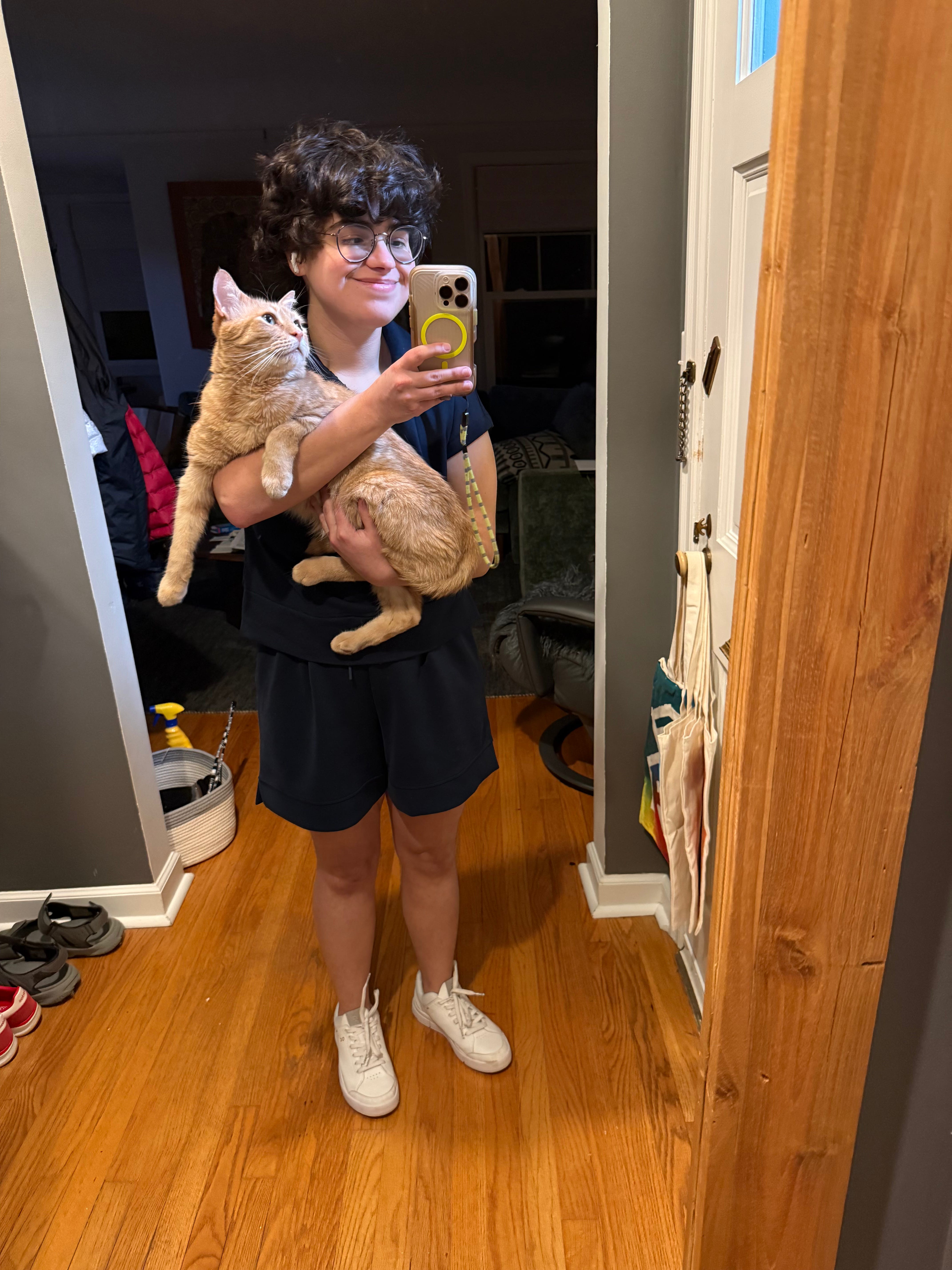
Hello everyone. For those who don’t know me, my name is Maia Poet. I’m 26 years old, and I’m a detransitioner.
For 12 years of my life, from the ages of 12 to 24, I identified as transgender. My so-called gender journey began in its most intense form around the 2011–2012 school year, as a 12 year old seventh grader. I spent the next 12 years navigating my gender questions inside my own family dynamic and outside of it. And no matter what my parents said or did, no matter how clearly they expressed their concerns about my desire to transition, that desire did not simply disappear. My parents even sent me to study abroad in the middle east hoping that being outside the context of an American college campus would make me reconsider the gender transition I had already begun, which was at that point seven years in the making. Instead, I constructed a whole life for myself in which I lived as a man in orthodox Jewish, Palestinian Muslim and more broadly secular spaces within Israeli society.
I organized my relationships, my social world, and my sense of self around the assumption that transition was the thing that would finally make my body feel livable, and that it was something I would have to do for the rest of my life.
But over time, as I lived it, that story I was telling myself began to crack
Some of those cracks came from living through extreme experiences; including living through rocket fire in Israel in May of 2021 and later the attacks of October 7. Those experiences forced me to confront questions I had been avoiding: What would it mean to be medically dependent on more than just my ADHD meds during a crisis? What would it mean to recover from intense, elective surgery in a world where I might need to run for my life without warning? What had I actually been asking my body to endure with the years of breast binding?
After October 7, I returned to the United States, significantly more traumatized than I had ever been before, and now in addition to dealing with that, I had to figure out what it meant to be a woman after having spent most of my sentient life under the passionate conviction that I would never need to be one. When I eventually decided to quit the gender transition I had invested the entirety of my adolescence into planning, as a way to stabilize myself through embodied, sensory discomfort that I had always experienced, for as long as I could remember, and which had only gotten worse with every year of life, I realized that there was a deeper problem I needed to confront.
The deeper problem was this: even when I decided to detransition, the discomfort I experienced in my body did not magically go away.
I did not quit my gender transition because I suddenly loved my body. I did not quit my gender transition because I loved “being a woman” (whatever that even means).
I did not quit my gender transition because I suddenly felt drawn to embodying the sensory hell of femininity, through painful beauty rituals, obnoxious, thick long hair that uncomfortably tickles my neck with every slight movement, with tight clothes, with makeup, with jewelry, or with any of the things that had caused me so much visceral sensory distress whenever I felt required to do it for the sake of pleasing other people at the expense of my own sanity and physical comfort.
I quit my gender transition for the same reasons that I had initially embarked upon it: out of a highly intellectualized, disconnected space from my body, in which I was trying to solve a problem that the whole time, I was attributing to the rightness or wrongness of my sexed body based on various sex-atypical personality factors and out of a total lack of self-awareness about the root causes of my intense embodied distress and psychosocial confusion.
In other words, though I eventually realized that there is no such thing as being literally born in the wrong body and experienced enough external trauma to make me understand the unsustainability of the lifestyle required to live as a woman who was hell-bent on convincing everyone she was a man, I still felt no more clarity about how to actually live a better life. I still had so many questions about why I was such a highly atypical type of woman in terms of my preference for logic over emotion, which is in fact an extremely alienating quality in female friendship groups, about why even amongst lesbians, I would be constantly referred to as being ‘male-brained’ and about why I still felt just as much of an odd duck in social interactions with other females that I do not experience while socially interacting with men.
Neither transition nor detransition alone offered me a pathway to truly living happily in my body, which even prior to puberty, felt like such a miserable and unpredictable place to be. In order to make my detransition stable and sustainable, rather than something which was constantly vulnerable to backslide, I knew something needed to change. And for that to happen, I needed to be very honest with myself in a way that has appeared to anger everyone on all sides of the trans issue. So, here it is:
The breast binding I did for a decade in order to pass as a man, did in many ways, make my body a more bearable place for me to exist in. But as soon as I stopped doing it, I was confronted with the extreme pain and damage this practice had inflicted on my body because I no longer had the compression I relied on to calm my brain, nor the brace that my body had effectively relied upon as it grew. Living in the male social role amongst my peers was far easier for me than being a weird girl who didn’t pick up on social cues and therefore relied on robust logic as a stand-in for the intuition I did not possess.
However, this too came with living a life of bureaucratic annoyances and the constant worry of what would happen if someone found out the truth. There is something inherently difficult about trying to pass oneself off as the opposite sex while desperately not wanting other people to know, especially for those who don’t want to transition to be “trans” but want to transition to be “normal.” This type of difficulty does not go away, even in the most trans-inclusive environments, because it is a more personal dissonance which comes from desiring that which cannot actually be achieved. It is a frustrating experience to be a really abnormal member of your own sex. But, my own experiences have taught me that it is even more frustrating to experience some version of social normalcy in the opposite sex role, only for time and nature to eventually reveal to you that something about you is also fundamentally different from the sex group in which your natural mannerisms and ways of thinking are more acceptable.
But at the same time, detransition alone had not cured that discomfort either. I spent the almost first two years of my detransition deeply traumatized by living through war and terror and witnessing horrors beyond my comprehension, being no more connected to my body than I had when I was still trans and actively trying to obscure my sex characteristics.
So I began asking myself a different question.
Instead of asking, “What gender am I supposed to be?” I started asking, “Why has my body always felt so unbearable to live in?”
And that question changed everything for me.
Because when I looked back at it honestly, the gender distress I experienced had not started with gender at all. Before I was gender distressed, I was not developmentally aware of the fact that I was female in any permanent sense, due to a delay in my developmental understanding of sex constancy. I had many developmental delays. I was too confused to understand that I was now a girl and would necessarily become a woman, to have been distressed by it at all. And when that process started happening, my confusion about that fact turned into distress. That isn’t to say that prior to puberty, I wasn’t living in a constant state of low-to-moderate distress. I was born prematurely.
Some of my earliest memories took place in doctors’ offices, where medical professionals were trying to address a long list of developmental delays, neurological issues, and body-based and speech-based difficulties. I was also gifted and sensitive to almost all forms of sensory input. I was a toe walker who spent kindergarten in leg braces. As soon as my toe walking was somewhat corrected, I began to compulsively pull out my eyelashes whenever it felt like the threads in my clothes were attacking my skin. The combination of all of these traits; both the disabilities and the giftedness, meant that my body felt like it constantly malfunctioned in ways that got universally worse with the onset of puberty, and that I had the type of brain that would not stop until it found the answer for the myriad of problems which my clinicians treated as a series of one-offs which caused a great deal of suffering that no one had an answer for. I began to need an answer when I was about ten or eleven. I was already a few years into an obsession with a rare brain tumor that caused people to grow super tall, and the older I got, the more my search became fixed on trying to figure out what was wrong with me. I came to find many correct answers, which were not taken seriously. And then, I came to the wrong answer. That answer to my life of struggles was that I was born with a “male brain in a female body” was taken very seriously. But unfortunately, not in ways that actually addressed a single one of my root problems. That set me up for a far more protracted state of confusion and vulnerability when I did embark upon the process of transition, even though it was a path that my parents thought they could prevent me from altogether by making their disapproval clear and hoping that time would do the rest.
What I eventually came to understand is that much of what I had experienced as gender dysphoria was actually tied to autism, sensory processing issues, poor body awareness, a type of social alienation that I was not fully aware that I was experiencing, and from a nervous system that had never learned how to feel safe inside my own body. Those aren’t things that kids just “grow out of” because you’ve told them “no” to their desire to transition. Those underlying problems need to actually be addressed for what they are.
This video is about that process in my own life: how I came to understand my gender dysphoria through the lens of autism, ADHD and sensory distress, and how that understanding helped me heal in a way that transition never did and detransition alone could not.
In addition to reflecting a lot on how my own thinking about my life has changed as I’ve grown up, I will provide a brief understanding into the earliest stages of my parents’ approach and their thought process because I think that both the perspectives of the parents and of their kids have a lot of analytical importance.
In many ways, I write the things on this blog that I wish my own parents would have understood about what I was going through, but that I was incapable of expressing to them as a very confused kid.
Until recently my parents thought that my gender issues were some random, out-of-the-blue indoctrination situation which, had they never gotten me an iPad, would never have afflicted me.
For more than a decade, that was their only working model of the situation. Though in reality, my gender issues were the entirely predictable outcome of having lifelong interactions with incompetent medical professionals who improperly diagnosed me and failed to properly treat or contextualize the neurodevelopmental issues that everyone already knew I had.
My parents had no way of knowing that my history of developmental delays and precocity could manifest themselves in this way, and it did not initially occur to them that these previous defining life experiences had anything to do with my gender issues. Lack of a proper diagnosis of what appears to be very clear autism, left both me and my parents without a way to understand that my challenges accurately rather than as a series of character flaws and harmless quirks. These initially harmless quirks, like not learning to tie my shoes until the age of 14 despite a years-long fixation with rare brain tumors starting in elementary school, followed a pattern of incredibly uneven development that would explain a lot about the types of supports I could have benefitted from to prepare me for the transition from childhood to adolescence, and from adolescence to emerging adulthood.
The truth was, that in 2011/2012 I was the 12-year-old specifically seeking out information about female-to-male gender transition because it had become my latest special interest alongside tons of other fixations in medical oddities, and also because it met a need for some clarity and a pathway out of my intense confusion, and promised an end to my suffering– if only I could just get my parents on board.
My parents thought my new iPad was the problem, so they removed my internet access. Their thinking about this whole thing was very Gen X: if the thoughts happened while the kid was on the interwebs, being exposed to something, taking away the interwebs will prevent the thoughts from continuing. But the truth was, that the seed was already planted. I was already a seasoned reader of non-fiction and medical publications, which I could access regardless of whether I had the internet. I took it upon myself to spend hours in libraries and bookstores finding printed content about all things transgender, much of it written in the 1990s and 2000s. Nothing my parents did to prevent me from consuming more of these patients’ life stories, information about medical procedures or theories about what caused transsexualism, achieved anything positive. My search for answers just went underground, powered by the strength of my lifelong autistic and adhd typical patterns of intense hyperfocus. I was the type of kid who read parenting books to understand my peers and to predict what would happen in my own development. I have always, for better or for worse, had a tendency of intellectualizing my life both as I lived it and instead of living it.
I stuck to this idea that I should have been born male so ardently, for so long, despite my parents’ non-affirmation, because their strategy, especially in those initial stages, did not treat the experience I was going through as formative, profound, and as a possibility for real connection. They panicked. And in the absence of real help (there was nothing for parents back in those days), they parented from that place. The way the situation was handled was largely unpleasant for everyone involved, to put it mildly. Of course, now I understand why. But I do think that with more intentional tools back in those early days, both me and my parents would have gotten much more clarity about what was actually going on with me.
The lack of a good working model of what was going on with me, either in the form of an ADHD diagnosis, which was still two years away, or an autism diagnosis, which I am only now in the process of pursuing, left my parents ill-equipped to meaningfully help me uncover the sources of my suffering and to help me with the issues I was actually dealing with.
The longer those needs went unmet, the more ardently I stuck to the idea that I could only ever be happy if I managed to make my female body “match” the male brain I thought I had. I did not have an alternative explanation or an alternative path presented to me. Trans was it.
Within a few years, an entire generation of autistic girls would do something similar. They too would come to think they had male brains in female bodies, which, from the perspective of a young autistic girl, can make perfect sense as an explanation for why she is so different, why she is suffering at the critical developmental inflection point of puberty, and what she needs to do to fix her own problem.
Because my own parents, despite their incredible competence and best intentions, were operating from a thoroughly incomplete model of why I was doing this, out of no fault of their own, but rather because the clinicians responsible for my care at multiple points throughout my life totally dropped the ball. But as a result, the actions they took to “solve” the problem not only failed to help me reconcile with my body in any way, but actually made our relationship worse.
When parents and clinicians rely on strategies based on a misunderstanding of what the young person is actually going through, they will be ill-equipped to understand the full scope of the root causes of that young person’s distress.
In the culture war around trans issues, gender dysphoria is often framed in one of two ways. Either it is treated as an organic medical condition that has always existed, but now has more awareness, so more of its sufferers are more likely to seek treatment, or it is treated as an indoctrination issue where the young person’s conclusions must simply be argued out of them.
I think both framings fundamentally miss the point by failing to account for really informative trends we see in terms of temperament and diagnosis within a large sub-population of gender distressed youth.
We know that conditions like OCD, ADHD, and autism are highly prevalent in this population. In non-diagnostic terms, we know that many of these kids are gifted, highly sensitive, impaired in the realms of attention and social interaction, and sometimes dealing with learning disabilities. We also know that certain subpopulations, namely girls and young women who are now overrepresented in gender dysphoric patient populations have often been misdiagnosed, undiagnosed, or treated for the wrong conditions even before their gender dysphoria appears.
In my coaching and consulting work with families, it has become abundantly clear to me that parents are trying to do right by their autistic and ADHD kids, whether they have allowed some degree of transition, or whether they have not allowed any of it. In many cases, these kids fall into a higher-functioning ASD or ADHD profile where, even if a diagnosis does happen, families are rarely given practical tools for how to parent the whole child through the complex distress of puberty, neurodevelopmental impairments, above-average intelligence, social confusion, and body distress.
What I’m hoping to accomplish in this neurodivergence-informed ROGD parenting series
Though I often use myself as a case study on this Substack, this video and the neurodivergence-informed parenting series I am building here will not be only about my personal story of navigating my own gender issues. It is also my attempt to introduce what I believe could be a very useful conceptual framework for understanding some cases of gender dysphoria in young people, especially young people who are autistic, ADHD, gifted, highly sensitive, anxious, obsessive, or struggling with sensory processing, body awareness and attention issues.
I wanted to create this series to help parents and clinicians think more carefully about the many ways that traits associated with autism, ADHD, giftedness, OCD, anxiety, sensitivity, sensory processing differences, and sensory integration issues can shape a young person’s relationship to their body. I think the current literature base around how to support gender questioning youth with neurodevelopmental conditions is sorely lacking despite the notably high prevalence of these comorbidities in this population.
The central idea I want to explore is that gender dysphoria can be a real experience that manifests very differently in different types of people, and for a variety of different reasons, without necessarily being the correct explanation for the type of treatment (in this case, social and medical gender transition) that the individual would always experience the most lasting and comprehensive benefit from.
I am far from the first person who has tried to parse through the adolescent gender dysphoria phenomenon experienced by today’s youth. Psychotherapist Sasha Ayad has been working on a series which I see as having a prudent conceptual understanding of gender as serving a metaphorical rather than a literal utility, the meaning of which is worth unpacking as it pertains to each individual experiencing it. In many ways, my thinking has been largely inspired by the brilliant intellectual scaffold she has proposed. So, Sasha, if you are reading this essay or watching this video, thank you.
Reflecting on my own experience, when I was a 12 year old kid who latched onto the idea that I was “born in the wrong body” I did not even know what metaphors were yet, let alone that my entire emerging self-concept had come from one. I would learn about metaphors in the following academic year. However, I was also a 12 year old kid who was known to take everything literally, including most figures of speech. Around middle school I did not understand why all of my classmates were beginning to use words with established dictionary definitions to mean the literal exact opposite of said established dictionary definitions. I was the kid and the young adult who took every metaphor literally.
I want to offer parents and clinicians this series of neurodivergence-informed strategies as one potential way to look beneath the gender explanation and to ask better questions that the autistic and ADHD young people in their care are most likely to actually understand, despite their challenges with attention and with highly literal thinking and communication styles, which tend to make their experiences in traditional talk therapy pretty unsuccessful. My series will be explicitly tailored to understanding the potential role of those neurodevelopmental differences in the overall presentation of a young person’s experience of gender distress. In this series, I will be drawing on my own experiences as well as making a bunch of inferences from my 14 years on both the inside and on the outside of trans communities in two countries with people around my age, and with similar comorbidities to mine.
Important limitations
I need to add a series of disclaimers here.
This series will be offering pretty general advice on a niche topic which is relevant to many parents and clinicians caring for this cohort of young people. However, general advice cannot replace individualized strategy which in any given case could require more support than what I am offering here. This series also cannot replace the full range of medical, mental health, psychiatric, or developmental support your child may need. Though that should go without saying, I feel compelled to say it.
The tips in this series are supplemental parenting tools that I’ve dreamt up as the result of a lot of thinking, talking, researching and working with families as I experience random creative impulses that have somehow managed to help families a lot. These tips are meant to help parents of neurodivergent youth (who often but not always have similar traits and/or diagnoses as their kids) to create a calmer home environment, strengthen the parent-child relationship, and develop a better working model of what their child may be going through or trying to express. My advice is made to help parent-child relationships around contentious issues like gender questioning, to experience joy throughout this process with your kids. These tips, I hope, will also be useful for clinicians who want to incorporate a more neurodevelopmentally informed lens into their work with gender-distressed young people.
This series is primarily for parents who have tried the quick-fix ROGD parenting strategies suggested to them online and are not impressed with the results. It is for parents who want to better understand how their child’s special or additional needs may be getting subsumed into the framework of gender dysphoria or transgender identity, so they can figure out other possible ways for how to meet their kid’s additional needs.
Because this video and the ones that follow are intended for a general audience, I can only begin with a broad framework and make it more granular as the series continues. I cannot possibly account for every child’s age, sex, temperament, developmental history, sensory profile, peer environment, family dynamics, or specific form of distress.
The way this framework applies to a sensitive 10-year-old girl overwhelmed by puberty will be very different from the way it applies to a sensitive 15-year-old boy or girl with traits or diagnoses of conditions like autism and ADHD, a long history of feeling alienated from other boys or girls, and years spent socializing in unknown internet forums with unknown people of unknown ages, being exposed to a myriad of age-inappropriate content.
It will look different again for the family of a 17-year-old applying to colleges, an 18-year-old already there, or a young adult in their early to mid-twenties struggling to launch into adulthood due to any number of factors, including neurodevelopmental disability. All of this will look different in cases where there is estrangement or an attempt to re-connect from it.
That is where individualized support matters.
To stay sane throughout this process, wherever you find yourselves, you will benefit from having a whole village on your child’s team and on yours. This can include extended family, friends, and ideally competent medical and mental health professionals, speech therapists, physical therapists or occupational therapists (where necessary), in addition to any kind of pastoral support (if that’s your thing).
If you’d like my help as a part of that team in thinking through your specific child, your specific family dynamic, and your specific communication challenges, and next steps, I offer parent coaching sessions. In those sessions, I help parents think through how to communicate better, build critical thinking and communication skills, reduce escalation, and set boundaries in a way that respects both the wishes of the parents and the needs of their child. Notably, I do this from a neurodevelopmental divergence-focussed lens and from the perspective of someone who was a kid navigating these things within my own family dynamic for an exceedingly long time.
I also help parents think through how to support their kid’s pursuit for embodied comfort and age-appropriate autonomy without reinforcing the idea that the child’s brain or body is literally wrong, and without getting pulled into endless, fruitless arguments about trans issues around the dinner table.
You can send me a DM if you’d like to work together.
The types of questions this series will and will not explore:
The questions I am not interested in answering in this series are those along the lines of, “How do we force our child to stop identifying this way?” or “what can I say to my kid or show my kid that will snap them out of this?”
Mostly because unlike small children, adolescents and young adults cannot just be forced into doing everything their parents want them to do. And also because human beings are not known to change their opinions on the basis of facts, especially when those opinions were not formed on the basis of facts, but rather on the basis of emotional yearning. That is not to say that reasonable boundaries delivered respectfully and explained clearly, are not important parts of any good parenting strategy. They absolutely are, and we can work on those things together.
Nor am I interested in questions like, “How quickly do we affirm this child’s interpretation of their distress and progress along the social and medical transition pathways?” Because I see that as being a reckless and harmful approach which fails to account for individual complexity.
But, I am interested in questions like:
What sensations are hardest for this child to tolerate?
Is this child overstimulated, exhausted, hungry, socially overwhelmed, hormonally dysregulated, or in pain?
Does this child/young person even remotely understand what their body is telling them?
Is this child struggling with puberty, embodiment, being perceived, or sexed social expectations?
Are there signs of autism, ADHD, OCD traits, giftedness, anxiety, sensory processing issues, or poor body awareness that we should incorporate into our understanding of how to help this kid experience less unnecessary struggle as he or she navigates adolescence?
Is this young person potentially confusing social alienation with an issue around sexed embodiment, or are they co-occurring?
To what extent is this youth’s presentation of gender or sex dysphoria related to his or her sensory processing delays, or any co-occurring physical disabilities?
What would help this child feel safer, more regulated, more communicative, and more functional in the body they already have?
What is this kid trying to communicate with the gender ideological script they are trying to speak to you through? Which types of communication is the kid already good at, and how do we use those to help scaffold his or her continued development?
Why are they using scripts rather than their own words, in the first place?
And many more.
The goal of this series is not to force a particular outcome. Some young people may still pursue social or medical transition no matter what their parents do or do not affirm, when they are older. Those young people still deserve to have the skills I will be covering in this series, because they are important and will help them to make more responsible and informed choices. Others, and I suspect, the majority of today’s gender dysphoric youth may find that non-invasive approaches, such as sensory accommodations, body literacy, emotional regulation, good family communication, and developmental support, will reduce their distress enough that transition no longer feels necessary or no longer feels like the only solution. Either way, the impacts of these underlying autistic and adhd traits on the youth’s experiences of socialization and embodiment need to be understood much more seriously both by their parents and by the clinicians responsible for their care.
This series is for parents of sensitive boys and sensitive girls. It is for clinicians working with distressed young people. It is for families trying to understand gender distress without rushing into either affirmation or endless confrontation. It is also for anyone trying to understand how autism, ADHD, OCD traits, anxiety, giftedness, sensitivity, sensory processing issues, or sensory integration problems can shape a young person’s relationship to the body during critical points of their adolescent development and into emerging adulthood.
Some of these kids in question will have formal diagnoses. Some only have traits of these conditions. Some have never been properly evaluated despite meeting diagnostic criteria. Some may simply be described as intense, sensitive, rigid, gifted, anxious, obsessive, avoidant, or easily overwhelmed. Whether or not a child or young person has a formal diagnosis, these traits can shape how they experience puberty, embodiment, social belonging, distress and identity development.
I also want this series to help parents and clinicians develop better conceptual frameworks and more stable protocols for reducing distress that young people experience in their bodies. A stable protocol cannot be built around ideology alone (either gender affirming or gender critical). It has to be built around the young person’s actual developmental, sensory, emotional, temperamental and family dynamic profiles.
That means looking at patterns around school, peer conflict, puberty, menstruation, clothing, sleep, food, screens, family communication, sensory overload, poor body awareness, social alienation, emotional interpretation problems, hormonal triggers, developmental delays, and environmental stressors.
Before we ask whether a given young person needs to change their body or their social role, we should ask whether anyone has helped them understand the body they already have.
For paid subscribers, I’m going to explain my framework more concretely: how sensory issues, poor body awareness, puberty, social alienation, and emotional overwhelm can become interpreted as gender dysphoria, and what parents and clinicians can begin doing differently in their work with these populations.
There are no quick fixes to any of these things. But with a better framework, I hope the whole thing will feel less daunting.
This video will be the first in a long series of neurodivergence-specific parenting tips for helping your child through gender dysphoria. In this first video, I will set up the framework and the skills I hope to cover throughout the series.
Your input will be helpful as I build this out. So pause the video or your reading for a moment and jot down whether anything I’ve said so far resonates with you. Write down any specific questions you have.
The rest of this video, and the more comprehensive tips I will publish as I finish each section of this series, will be available in full for paid subscribers. There, I can begin giving more granular advice about some really niche topics.
As part of this project, I will also host periodic exclusive Q&As aimed specifically at parents and clinicians, so I can hear your questions and get your input about what else this series needs.
So, if you like my approach and you’ve decided to support me through a paid subscription, now would be a good time to pause the video, grab a fancy little drink, your headphones, a notebook, and something to write with.
If anything I say jumps out at you, please write it down and send it to me as a comment or as a restack on this post so I can keep track of everything.
Thank you for your support. Now I’ll move on to the paid section.


