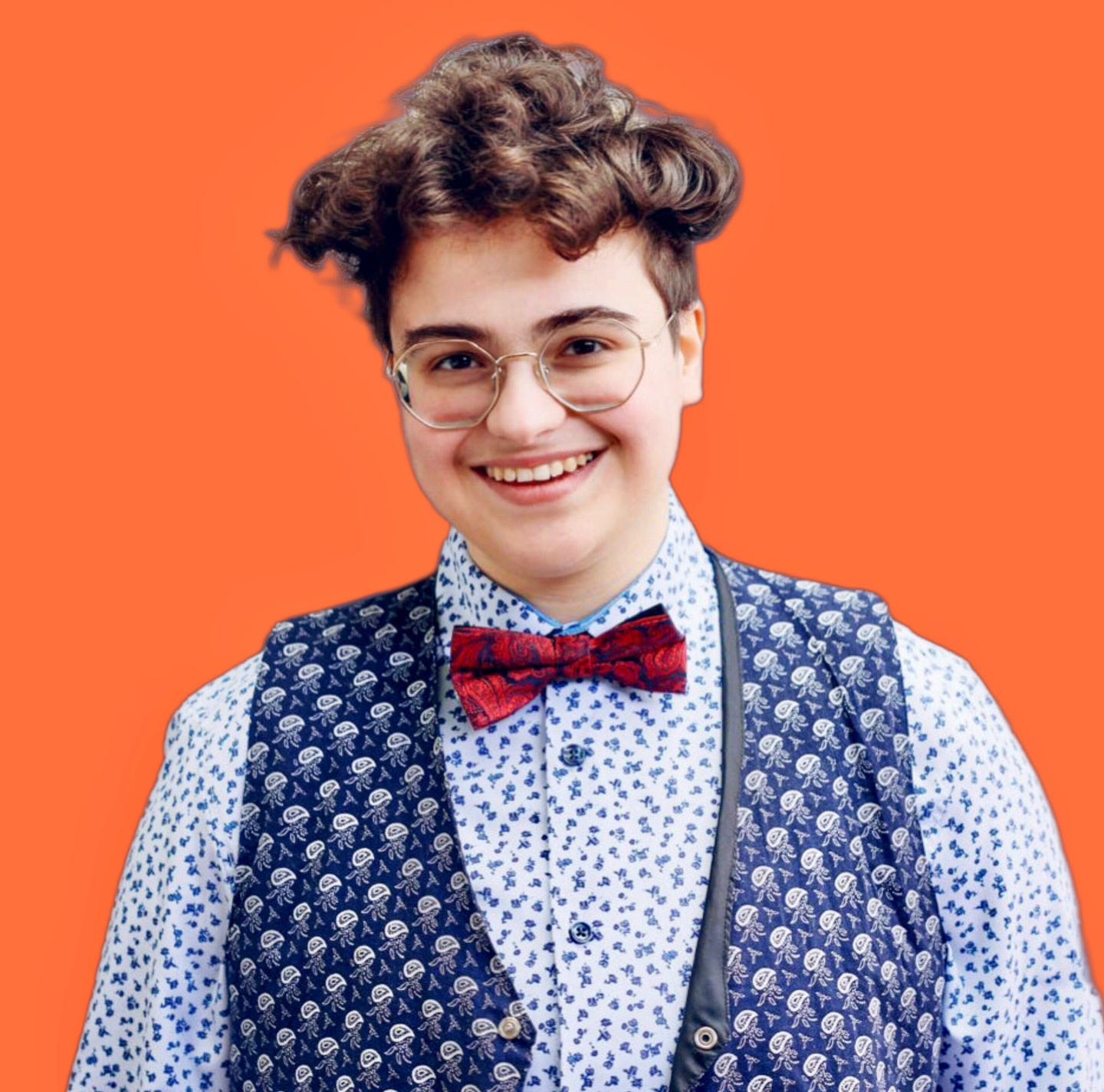
This is a three hour long recording from my LIVE video, in which we discuss some really interesting topics in extreme depth. Read through this little essay to find the full timestamps of the different topics we discuss in the LIVE. There are also some announcements at the end about my new upcoming projects and about how your input can help me build it.
As you can imagine, my essays and videos take a lot of time and effort to produce and to bring to you. As a 26 year old independent writer, your support of my work through paid subscriptions is vital for me to be able to continue bringing my insights to you. You can upgrade to a paid subscription by clicking on the “subscribe” buttons in this post.
You can also support my work by liking, commenting and re-stacking or sharing my essays. All of these things help the algorithm to bring this content to those who may find it beneficial.
Thank you Nelson G, Robert Nichols, Erm, Elise, and many others for tuning into my live video with Aaron Terrell, Exulansic, Jillian England, and Malka!
What does it mean to say that someone is autistic? Does the label help or harm the person it’s being applied to? I started this live stream pretty impulsively, honestly, because of some discourse that was raging on X. But what ended up unfolding over the next three hours turned into one of the most honest and wide-ranging conversations I’ve had on this topic.
I’m Maia, a 26 year old who reflects on her experiences of gender dysphoria, transition, detransition, autism and ADHD to help parents and clinicians caring for today’s gender questioning autistic and ADHD young people, to better understand and meet the special needs of the young people in their lives.
In this LIVE video, I’m joined by co-hosts: Aaron Terrell, a trans man and prominent gender-critical thinker on X; Jillian England, a 65-year-old trans woman who transitioned in the early 2000s; and Malka, a 22-year-old Jewish woman raised in an ultra-orthodox community, with a deep interest in psychology.
Together we explore the surge of women (especially in their 30s and 40s) seeking late autism diagnoses, and we engage the question being asked a lot these days; does this represent a genuine epidemic of underdiagnosis finally being corrected, a new social contagion among women, is both?
Along the way I share a lot of my own developmental history as a premature baby with unrecognized (and significantly impairing) autistic traits which only caused continued issues as I got older, notably including pretty severe gender dysphoria for over a decade. In this LIVE we get into the deep connection between autism and gender dysphoria in adolescent girls; how the autistic emotional experience differs from neurotypical empathy in ways that are frequently misread as coldness or narcissism; the myth of robust historical gatekeeping in gender medicine; and why understanding the etiology behind a cluster of traits matters just as much as understanding the impacts of the traits themselves; especially when it comes to how they are treated clinically. This is a conversation I’ve been wanting to have for a long time, and I think what came out of it surprised even me.
Detailed Timestamp Breakdown (according to an AI)
00:00:07 – 00:02:00 | Introduction & Guest Welcome Maia opens the live stream, waits for guests, and introduces Aaron Terrell as co-host.
00:02:00 – 00:05:15 | Aaron’s Introduction & Background Aaron is a trans man involved in the gender-critical movement (these days largely on X)who is concerned about the medical harms of transition and gender ideology. Aaron’s focus is on understanding what draws people toward gender ideology, with a particular emphasis on the autism-gender dysphoria overlap and theorizes about its connection to the phenomenon of auto-sexuality.
00:05:15 – 00:09:15 | The Christina Buttons Article & The Autism Diagnosis Discourse Maia explains the impetus for this live: a Free Press article by Christina Buttons titled “I Thought I Was Autistic. I Was Wrong.”

Maia outlines the controversy it sparked; is the wave of women seeking autism diagnoses a social contagion, or are these genuinely underdiagnosed women finally finding language for their struggles?
00:09:15 – 00:11:05 | “Two Things Can Be True at Once” Aaron and Maia agree that both the social contagion explanation and the underdiagnosis explanation can coexist. They distinguish between autism self-identification (finding language for pre-existing traits) versus trans social contagion (adopting an identity and then developing its associated symptoms).
00:11:05 – 00:16:35 | The Problem With Over-Diagnosing & the Utility of Labels Aaron questions whether giving people, especially high-functioning individuals, an autism diagnosis is actually helpful. Aaron discusses the experience of autistic traits were “bullied out” through social conditioning, and argues that over-identification with a diagnosis can be more harmful than beneficial. Aaron contrasts this with Maia and Christina, whom Aaron sees as more significantly impacted.
00:16:35 – 00:26:00 | Maia’s Developmental History Maia shares a detailed personal history: premature birth, NICU stay, never crawling, toe walking, Botox injections and leg braces in kindergarten, the Montessori teacher who misunderstood Maia’s routines, an obsessive love of cats, and the crushing disappointment of not getting cat-patterned leg braces. This section is rich with firsthand illustration of early autistic presentation in girls.
00:26:00 – 00:30:00 | Why Maia Wasn’t Diagnosed: Girls, Speech, and Precocity Maia explains why her autism went unrecognized; there was no speech delay (in fact Maia was verbally precocious and bilingual), Maia engaged in echolalia from children’s books (including the phrase “oodles and oodles of creamy butter, please”), and the premature birth allowed clinicians to attribute every developmental irregularity to being a preemie rather than to a broader neurodevelopmental pattern.
00:30:00 – 00:34:00 | Trichotillomania, Psychotherapy, and the “Trickster” Story Maia describes compulsively pulling out eyelashes, visiting a psychologist who asked Maia to draw “the trickster in the brain,” how the intervention failed, and how Maia transitioned from eyelash-pulling to compulsive hair twirling after being medicated for ADHD at 14.
00:34:00 – 00:40:05 | Sensory Motor Planning as the Root of Autism Maia theorizes, drawing on conversations with speech-language pathologist Exulansic that all autistic deficits may be rooted in early sensory motor planning difficulties, which lead to a perception of the environment as unsafe, rigid and repetitive behaviors for self-regulation, and subsequently underdeveloped social intuition.
00:40:05 – 00:48:55 | AuDHD, Diagnostic Labels, and the Risk of Hyperfixating on Categories Aaron and Maia discuss the increasingly common “AuDHD” co-presentation, and both caution against becoming so fixated on diagnostic labels that we miss the larger phenomenon. Aaron draws on a background in history to argue for looking at the full constellation of psychological, cultural, and neurological forces rather than seeking a single cause.
00:48:55 – 00:54:45 | A Psychotherapist’s Self-Aware Comment from the Chat Maia reads a comment from a psychotherapist in the chat who admits to being confused about autism and wary of over-diagnosing. Aaron and Maia discuss this as a rare and encouraging example of clinical humility, and the broader problem of psychiatry going “full hog” into labeling everything.
00:54:45 – 01:01:00 | Autism as a Defense in Criminal Cases A viewer asks about autism being used as a criminal defense (referencing UK case Nathan Fake and a CSAM ring). Aaron and Maia distinguish between cases of genuine social misunderstanding (e.g., misreading consent cues) versus premeditated criminal acts where autism cannot and should not be a mitigating factor. They also briefly discuss Neil Gaiman’s use of autism as an explanation for alleged sexual misconduct.
01:01:00 – 01:12:00 | Autistic Empathy: Physical vs. Emotional Suffering Aaron and Maia explore the often-misunderstood empathy of autistic people; highly attuned to physical suffering in others but frequently appearing cold in emotional situations, not from indifference but from genuine difficulty identifying and responding to emotional states. Maia describes a childhood inability to distinguish emotions from physical illness, for example coding a lump in the throat as a cold symptom that could be resolved by drinking water.
01:12:00 – 01:22:30 | Problem-Solving vs. Emotional Validation in Relationships Aaron and Maia both discuss the relational challenge of being “fixers” rather than emotional validators, the instinct to analyze and solve a partner’s problem rather than simply saying “I’m so sorry.” Both identify this as feeling more caring, even though it’s often received as cold or dismissive. Maia connects this to a hyper-literal language use across multiple languages.
01:22:30 – 01:35:00 | Jillian Joins: Long-Term Transition, Disillusionment with Medicine Jillian (65, trans woman, transitioned starting in 1998, continued into 2001–2003 in Seattle) joins as a co-host. Jillian describes how the Seattle gender clinic in the early 2000s was pushing people through transition quickly, which challenges the myth of robust historical gatekeeping. Jillian expresses deep disillusionment with the medical-industrial complex broadly, from gender medicine to cancer treatment to statins.
01:35:00 – 01:48:00 | Jillian’s HIV Vaccine Trial, MS Diagnosis, and Steroid Psychosis Jillian recounts participating in an early mRNA HIV vaccine trial, subsequently testing false-positive for HIV, developing MS, experiencing a full MS attack, and then suffering steroid psychosis from treatment — which the neurologist refused to acknowledge. Jillian later reversed much of the MS progression through a low-carbohydrate, high-fat diet and intermittent fasting.
01:48:00 – 01:55:30 | For-Profit Healthcare, Insurance Coding, and Systemic Medical Failures Jillian and Maia discuss how profit-driven healthcare structures — insurance codes, billing algorithms, AI-driven claims management — systematically deprioritize individual patient care. Maia clarifies that the problem isn’t individual greedy doctors but structural incentives.
01:55:30 – 02:03:00 | Autistic Girls, Trans Identity, and Social Legibility as Males Aaron and Maia discuss why trans identity specifically appeals to autistic females: male social norms are more explicit and rule-bound (appealing to systematizing minds), social quirks are less conspicuous when read as male, and boys’ social interaction (while involving more sudden physical contact) lacks the intimate, confusing touching norms of female peer groups.
02:03:00 – 02:09:30 | Malka Joins: CPTSD vs. Autism: Malka, a friend of Maia’s who grew up ultra-Orthodox Jewish, raises the question of differentiating Complex PTSD from autism in women. Malka argues that relational and developmental trauma can produce traits that look autistic, and suggests that the trans phenomenon and even autism self-diagnosis can sometimes serve as ways of avoiding confronting trauma narratives.
02:09:30 – 02:22:00 | Intergenerational Trauma, Orthodox Judaism, and Autistic Traits Malka and Maia explore the overlap between Jewish communal neuroses especially in Ashkenazi communities shaped by Holocaust trauma, and traits we might call autistic: rigidity, systematizing, hyperfocus on rules, hypervigilance, and high IQ clustering. Maia discusses the selection pressure theory (the most paranoid, neurotic Jews survived genocides), and the way Orthodox Judaism’s ritualism may reflect or encourage autistic-style behavior.
02:22:00 – 02:30:00 | Malka’s ODD Diagnosis, DSM Reform, Sensory Processing vs. Autism Malka reveals having been diagnosed with Oppositional Defiant Disorder as a teenager, which both Malka and Maia find absurd and emblematic of psychiatry’s failure. They discuss the need for DSM reform and distinguishing sensory processing disorders from autism, ADHD social difficulties from autistic ones, and calling for etiology to matter in diagnosis rather than just symptom clusters.
02:30:00 – 02:42:00 | Autistic Language Use, Multilingualism, and the Layers of Social Interaction Maia reflects on why speaking four languages feels necessary, in part because a hyper-literal communication style requires the largest possible vocabulary to express precise sentiment, and non-literal communication (sarcasm, backhanded compliments, social signaling) feels both incomprehensible and pointless. Maia notes only becoming aware at nearly 27 of how many social layers most people navigate effortlessly.
02:42:00 – 02:52:00 | Closing Notes: N-Acetylcysteine for BFRBs, Upcoming Content Malka shares that N-acetylcysteine (NAC) has substantially reduced skin-picking (a body-focused repetitive behavior), citing small clinical trials. Maia announces work on a neurodivergence-informed ROGD parenting series, which will be available in full for paid subscribers. Your input is critical in helping me build the types of lessons that will help you and your kids succeed in life and to better understand one another. My comment section is always open.
Conclusion
What I keep coming back to after this conversation is that a diagnostic label does not always entail self-understanding, though for some people it allows for that development to occur. Whether we’re talking about autism, CPTSD, gender dysphoria, or any other framework I use to make sense of human suffering and difference, a diagnostic category only becomes useful when it opens a path toward actually understanding the person; their developmental history, their sensory experience, their relational world, and the cultural forces shaping all of it. When it short-circuits that inquiry instead of deepening it, we’ve missed the point of labeling what are essentially personality traits in cases where impairments don’t exist (or where the impairments are cultural moreso than personal).
I’ve spent a lot of time on my Substack trying to dissect what it actually feels like to grow up with an autistic mind and an autistic body; not as an abstraction, but by analyzing the experience trait by trait, developmental stage by developmental stage. What this conversation reinforced for me is that we don’t have simple answers yet, and anyone who tells you otherwise is probably selling something akin to snake oil. What we do have, is the ability to ask better questions, extend more charity to people who are genuinely struggling, and hold the complexity of all this without reducing it into unhelpful sloganeering.
The conversations we are having about gender and autism, are happening now far more commonly than they have in the past: in live streams, on Substack, among people who have firsthand skin in the game. Those of us most affected by these medical, diagnostic, therapeutic, educational and institutions in both the realms of gender medicine and in that which pertains to autism support services, are now old enough to tell our stories and to fight for those who still have yet to grow into their adult selves, to get the standard of care which they deserve. I’m grateful to Aaron, Jillian, and Malka for showing up and thinking out loud with me, and I’m grateful to everyone who stayed in the chat for three hours on a weekend.
Now, for some announcements.
Important announcements:
Are you looking for autism and adhd specific parenting tips?
If so, I’ve been working on a series of lessons tailored to your family’s needs. It’ll be available in full for paid subscribers. Subscribe now to lock in at the lower price.
Is your kid navigating gender questioning and neurodivergence, and you’d like my two cents on how best to support him or her?
If so, I offer parent coaching sessions to help you figure out how to best to navigate your specific child’s situation, in a compassionate and practical way. If this is of interest, please DM me.
Please share, comment and repost this article to give it traction in the algorithm. I can’t wait to hear your thoughts on anything I’ve written here and/or any of your ideas on which topics to include in my upcoming ‘neurodivergence’-informed parenting series.
Essays referenced in the LIVE:


Join me for my next live video in the app.